

Ceramic window tint is a premium film that blocks up to 99% of UV rays, rejects a significant amount of heat, and avoids the signal interference associated with metallic tint. It also lasts longer than standard films and does a better job of protecting both you and your vehicle from constant sun exposure.
The biggest ceramic tint benefits include:
- Up to 99% UV protection
- Better heat rejection
- Reduced glare while driving
- No GPS or cell signal interference
- Cooler cabin temperatures
- Longer-lasting performance
- Added glass protection during impacts
If you’re comparing tint options, the real question isn’t whether ceramic tint works. The question is whether the extra cost delivers enough value to justify the upgrade.
What Is Ceramic Tint? (And What Makes It Different)
What is ceramic tint?
Ceramic tint is a window film made with microscopic ceramic particles that help block heat and UV radiation. These particles are non-metallic and non-conductive, which allows the film to perform without interfering with electronics.
You may also see people ask, what is ceramic window film. The two terms refer to the same product.
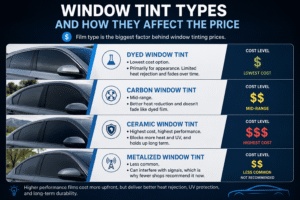
The biggest difference between ceramic tint and standard tint comes down to performance. Dyed films mainly darken the glass. Metallic films improve heat rejection but can interfere with GPS, mobile phones, and radio signals. Ceramic film focuses on heat rejection, UV protection, and long-term durability without creating those drawbacks.
That distinction matters because two cars can have windows that look almost identical from the outside while delivering completely different results inside.
The 7 Key Ceramic Tint Benefits
1. Ceramic Tint UV Protection — Up to 99% Blocked
One of the strongest benefits of ceramic window tint is its ability to block up to 99% of harmful UV rays.
Sun exposure affects more than your skin. It slowly damages everything inside your vehicle. Leather dries out, dashboards crack, upholstery fades, and plastic trim begins to show its age. These changes don’t happen overnight, but they become expensive once they appear.
This is where ceramic tint UV protection stands apart from lower-quality films. The film works every day, whether you’re driving across town or leaving your car parked outside for hours.
If you’ve ever compared the interior of a garage-kept vehicle to one that spends years sitting in direct sunlight, you’ve already seen the impact UV exposure can have. Ceramic tint helps slow that process significantly.
2. Heat Rejection — Keeps the Cabin Noticeably Cooler
Heat reduction is usually the reason people start researching ceramic tint.
A vehicle can feel uncomfortable long before the outside temperature reaches triple digits. Glass allows infrared heat to enter the cabin, and once that heat builds up, your AC has to work harder to compensate.
This is where a ceramic car window tint earns its reputation.
The goal isn’t to make your vehicle cold while it’s parked. That’s not realistic. The goal is to reduce how much heat enters through the glass so the cabin stays more manageable and cools down faster once the AC starts running.
For drivers interested in car tinting in Sacramento, this benefit becomes particularly important during the summer months. The difference between stepping into a vehicle that’s absorbed hours of heat and one protected by ceramic film is immediately noticeable.
3. Glare Reduction — Easier on Your Eyes
Driving into bright sunlight can be exhausting.
Glare reflects off roads, dashboards, windshields, and nearby vehicles. Your eyes constantly adjust to changing brightness levels, which can make long drives more tiring than they need to be.
Ceramic tint helps by reducing glare without creating an overly dark interior.
Can you see better through ceramic tint?
In bright conditions, yes.
The film cuts harsh light while maintaining visibility. Instead of squinting through sunlight during your morning commute or evening drive home, you get a more comfortable and consistent view of the road.
This is one of those benefits of ceramic tint that often gets overlooked until drivers experience it for themselves.
4. No Signal Interference
Some older metallic window films interfere with:
- GPS systems
- Mobile phones
- Satellite radio
- Toll transponders
Ceramic film avoids these problems because it contains no metal.
That may not sound like a major selling point until you’re relying on navigation in an unfamiliar area or dealing with a toll reader that suddenly stops working.
One reason why is ceramic tint better than metallic film is that it delivers strong heat rejection without creating new frustrations.
5. Durability — It Won’t Fade, Bubble, or Turn Purple
Window tint should look good years after installation, not just during the first few months.
One of the common complaints about low-quality tint is how quickly it begins to show its age. Purple discoloration, peeling edges, and bubbling are all signs that the film is breaking down.
Ceramic tint is designed to resist those issues.
The color remains stable. The film maintains its performance. The appearance stays consistent over time.
At JH Window Tinting, durability is one of the main reasons customers choose ceramic film. Nobody enjoys paying for tint twice because the first installation failed prematurely.
6. Energy Efficiency and Reduced AC Usage
When less heat enters the cabin, your air conditioning system doesn’t need to work as hard to keep the vehicle comfortable.
That may sound like a small advantage, but it becomes noticeable during long drives and hot afternoons. The cabin reaches a comfortable temperature faster and maintains it more easily.
For Sacramento drivers, this is one of the practical advantages that shows up every day during the warmer months.
Vehicle owners who want comprehensive protection often pair ceramic tint with paint protection film in Sacramento. One helps protect the interior from heat and UV damage. The other helps protect exterior paint from chips, scratches, and road debris.
7. Added Glass Safety
Ceramic tint isn’t a safety device, but it does provide an additional layer of protection.
If a window breaks during an accident or impact, the film can help hold shattered glass together. This may reduce flying shards and help contain broken pieces.
The same principle can slow down smash-and-grab attempts because the glass doesn’t immediately fall apart after impact.
This isn’t the primary reason to invest in ceramic tint, but it’s a benefit worth having.
Is Ceramic Tint Better Than Regular Tint?
Is ceramic tint better?
For heat rejection, UV protection, and durability, yes.
Compared to dyed tint, ceramic film:
- Blocks more heat
- Offers better UV protection
- Lasts longer
- Maintains its appearance
Compared to metallic tint, ceramic film:
- Doesn’t interfere with electronics
- Provides better clarity
- Delivers comparable or better performance
Compared to carbon tint, ceramic film generally offers stronger heat rejection and better infrared blocking.
The tradeoff is cost.
That’s the main reason people hesitate. The performance advantage is real. The question becomes whether those benefits matter enough to justify the higher investment.
Why Is Ceramic Tint Better?
The answer comes down to consistency.
It blocks heat more effectively, protects against UV exposure, avoids signal interference, and maintains its appearance for years. You’re not paying for a darker window. You’re paying for better performance across the board.
What Are the Disadvantages of Ceramic Tint?
The biggest drawback is price.
Ceramic tint costs more than dyed and carbon films. In Sacramento, a full ceramic installation often falls between $400 and $900+, depending on the vehicle and film brand.
Installation quality also matters.
A premium film installed poorly can still produce disappointing results. Dust contamination, visible edges, and uneven application can undermine even the best products.
Film quality varies as well. Not every product marketed as ceramic performs at the same level.
That leads to a common question:
Is ceramic tint a gimmick?
No.
The technology is well established and supported by measurable performance data. The challenge is choosing a quality film and having it installed by a shop that understands the product.
Is Ceramic Tint Legal?
Yes.
The material itself is completely legal.
What matters is the darkness level, also known as Visible Light Transmission (VLT). California regulates how much light can pass through certain windows.
A professional installer can help you choose a legal film while still maximizing heat rejection and UV protection.
JH Window Tinting works with customers every day to find options that meet California regulations without sacrificing performance.
How to Choose a Ceramic Tint Installer in Sacramento
The film matters, but the installation matters just as much.
When comparing shops, ask:
- What film brands do you use?
- What warranty comes with the installation?
- How long have you been installing ceramic tint?
- Can you explain the differences between film options?
A reputable shop should answer these questions clearly and without pressure.
At JH Window Tinting, the focus is simple: quality films, clean installations, and recommendations based on how you actually use your vehicle.
Drivers interested in car tinting in Sacramento often ask about protecting the rest of the vehicle as well. That’s why many customers combine ceramic tint with paint protection film in Sacramento for complete interior and exterior protection.
Is Ceramic Tint Worth It?
The answer depends on what you expect from your tint.
If you’re looking for the cheapest option available, ceramic probably isn’t the right choice.
If you want stronger heat rejection, better UV protection, longer-lasting performance, and a more comfortable driving experience, ceramic tint delivers value every day.
The strongest benefits of ceramic tint aren’t things you notice once. You notice them every time you get into your car after it’s been sitting in the sun, every time you drive into harsh afternoon glare, and every time your interior looks better than expected years down the road.
For drivers still asking what does ceramic tint do, the answer is simple. It helps your vehicle stay cooler, protects your interior, reduces glare, and holds up better over time. That’s why ceramic remains the premium choice for drivers who want performance rather than just appearance.
So, is ceramic tint good?
For most Sacramento drivers, yes.