

Getting your windows tinted isn’t something you do every year, which makes it hard to know whether a shop is quoting a fair price or cutting corners. A bad tint job can leave you dealing with bubbling film, peeling edges, or even tint that has to be removed and replaced.
The biggest red flags are shops that won’t even discuss legal tint limits, prices that seem unusually low, vague warranty coverage, dirty installation areas, and examples of past work that already show defects.
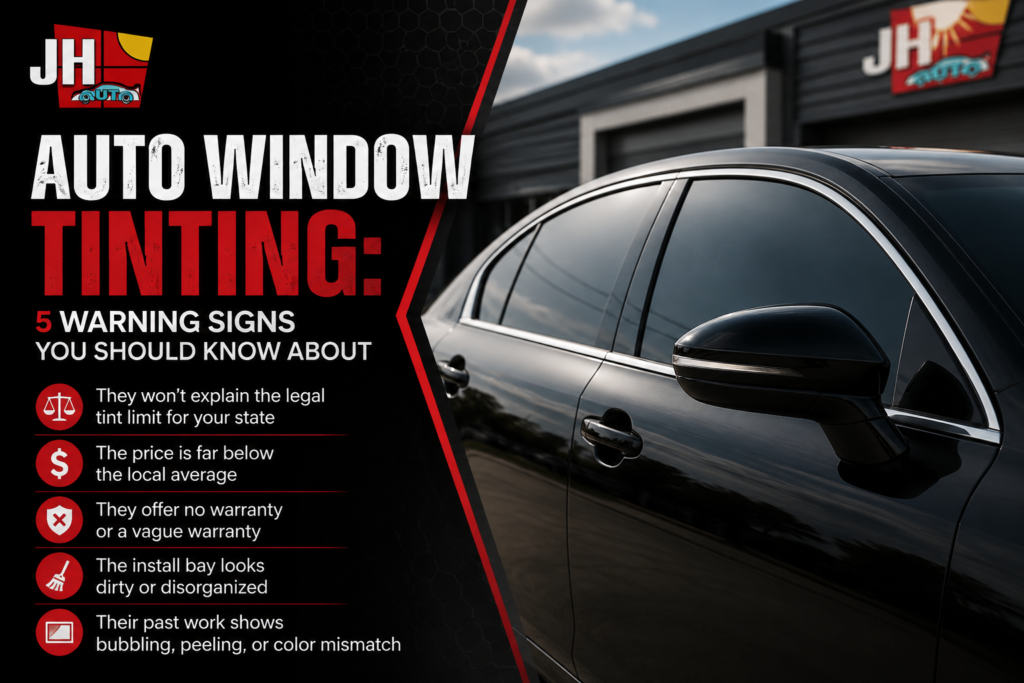
The 5 Warning Signs of a Bad Auto Window Tinting Job
Before scheduling an appointment, it’s worth looking beyond the sales pitch. A quality tint installation depends on the materials being used, the installation environment, and the experience of the installer.
These five warning signs can help you identify potential problems before they become your problem.
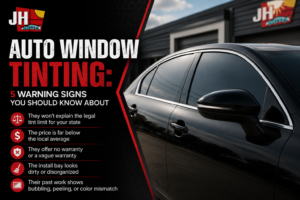
- They won’t explain the legal tint limit for your state
- The price is far below the local average
- They offer no warranty or a vague warranty
- The install bay looks dirty or disorganized
- Their past work shows bubbling, peeling, or color mismatch
Warning Sign #1: They Won’t Tell You the Legal Tint Limit for Your State
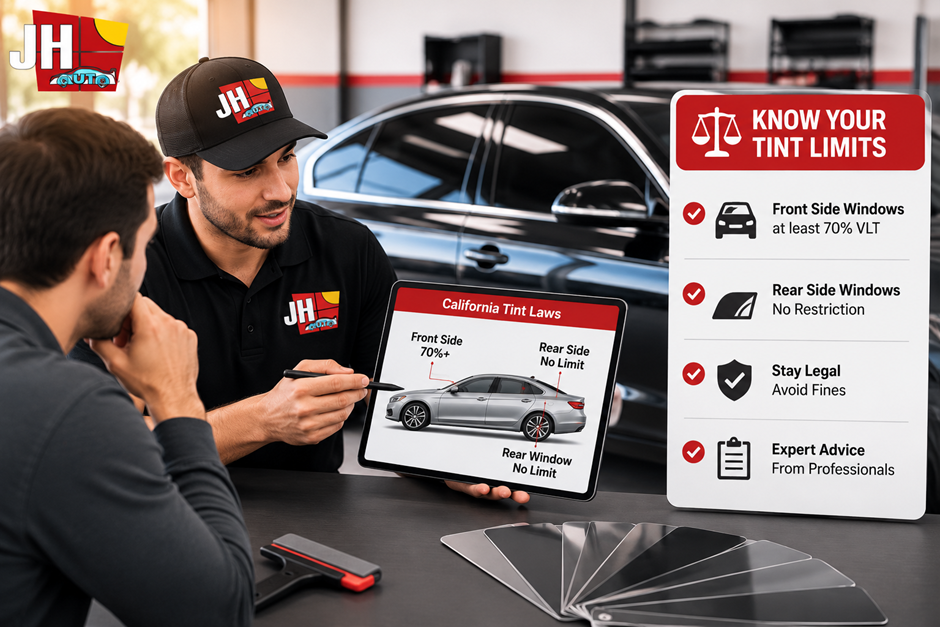
A reputable auto window tinting shop should be able to explain local tint laws before discussing products or pricing. Tint regulations vary by state, and the amount of visible light transmission (VLT) allowed on different windows can differ significantly.
In California, for example, front side windows must allow at least 70% of light through, while rear windows have no darkness restriction, which is exactly the kind of detail a shop should walk you through before recommending a film.
If a shop seems uninterested in discussing legal limits or immediately recommends the darkest possible film without asking questions, that’s a concern. A professional installer should help you choose a film that meets your goals while staying compliant with local regulations.
Some shops even provide a basic tint guide or window tint 101 overview to help customers understand their options before making a decision.
Do Cops Actually Care About Illegal Tint?
Yes. Illegal tint can result in traffic stops, citations, and orders to remove the film. Enforcement varies by location, but installing film that exceeds legal limits can create unnecessary headaches later. A reputable installer should help you avoid that situation rather than encourage it.
Warning Sign #2: The Price Is Way Below Market Rate
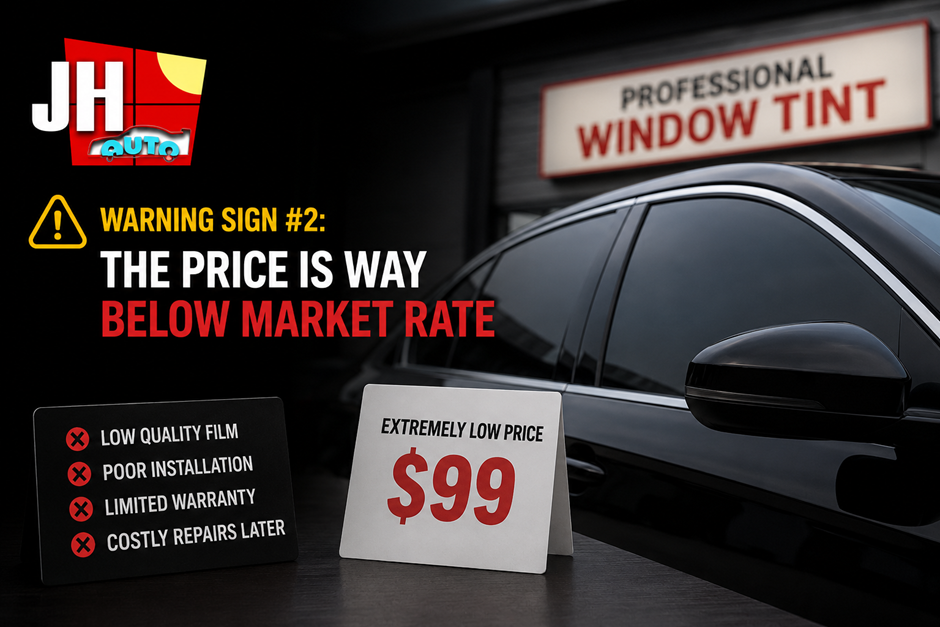
Everyone likes saving money, but extremely low pricing often raises questions about the film quality, installation process, or warranty support being offered.
Professional tinting often costs a few hundred dollars because you’re paying for the film itself, the installation environment, and the experience needed to get clean results. A price that’s far below everyone else may indicate compromises somewhere in that process.
The best auto window tinting isn’t always the most expensive option, but it rarely ends up being the cheapest. If one quote is dramatically lower than every other quote you’re receiving, it’s worth asking why.
A low initial price can become expensive if bubbling, peeling, or premature replacement becomes necessary a year later.
Read More – How Much Does Window Tinting for a Car Cost?
Warning Sign #3: No Warranty or a Vague One
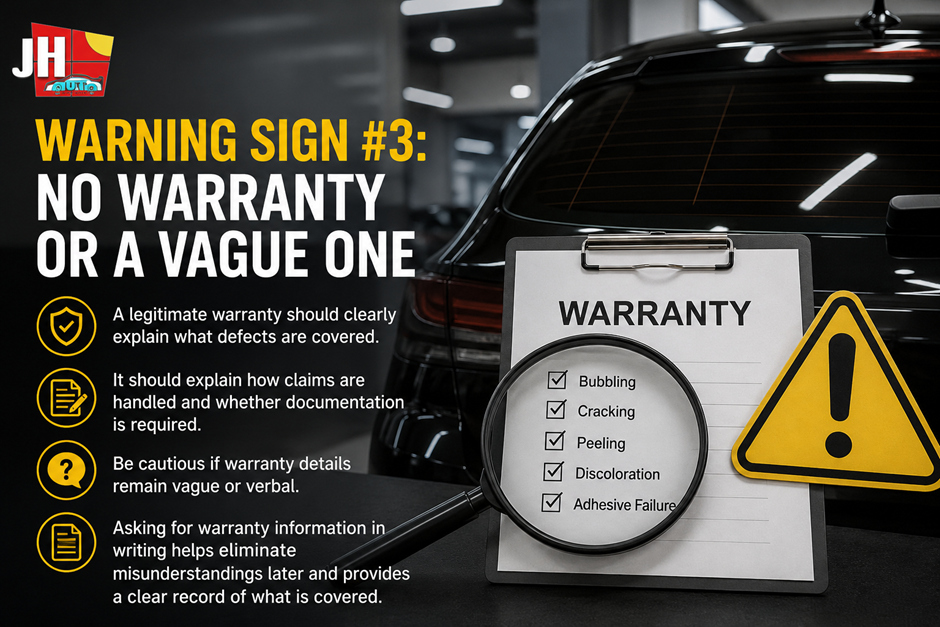
Window tinting work is expected to last for years. Because of that, a professional installer should clearly explain what happens if something goes wrong.
A legitimate warranty should explain whether defects such as bubbling, cracking, peeling, discoloration, or adhesive failure are covered. It should also explain how claims are handled and whether documentation is required.
Be cautious if warranty details remain vague or verbal. Asking for warranty information in writing helps eliminate misunderstandings later and provides a clear record of what is covered.
Warning Sign #4: The Shop or Install Bay Looks Dirty
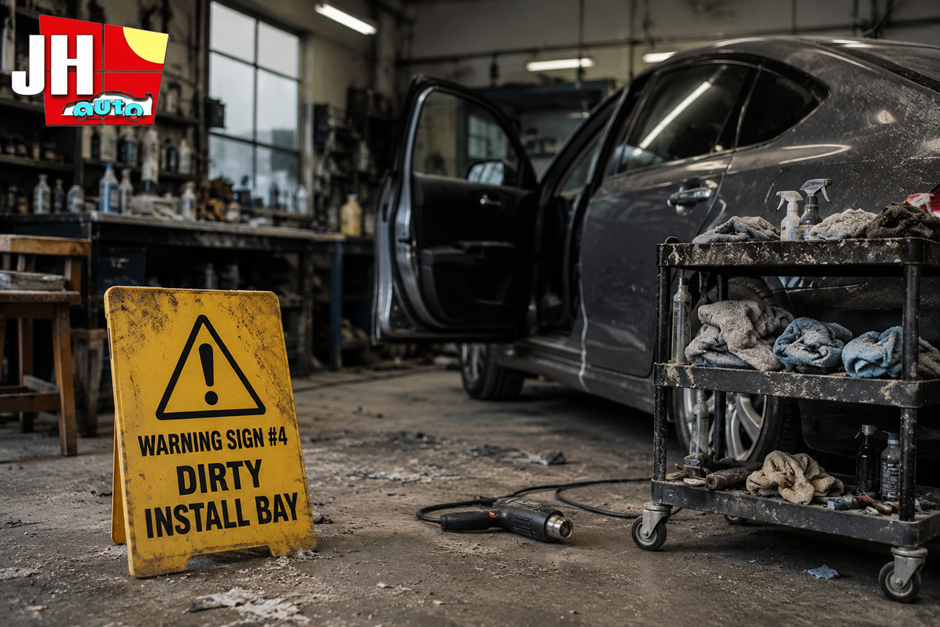
A professional window tinting installation requires a clean environment. Dust, lint, pet hair, and airborne debris can become trapped between the film and the glass during installation.
A quick look around the installation area can reveal a lot about a shop’s attention to detail. If you walk into a shop and see dust everywhere, that’s worth paying attention to.
Window film attracts debris surprisingly easily. A tiny piece of lint trapped under the film may not sound like a big deal, but once the tint cures and sunlight hits the glass, you’ll see it every time you drive.
Warning Sign #5: Their Past Work Shows Bubbling, Peeling, or Mismatched Color
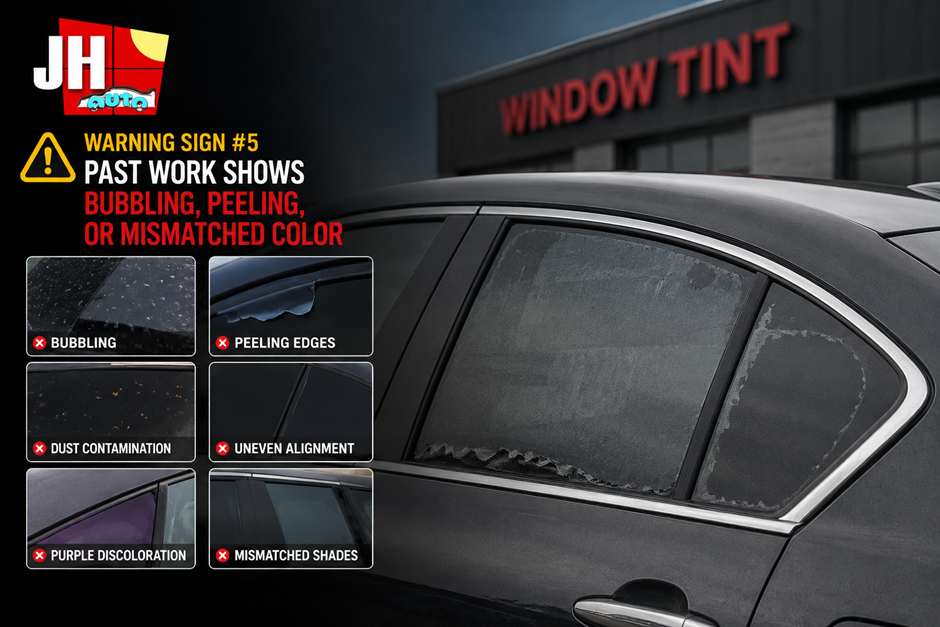
Photos of completed vehicles can tell you a lot about the quality of a shop’s tinting work.
Look closely at window edges, corners, and large glass surfaces. Film should appear smooth and consistent. Obvious bubbles, lifting edges, peeling corners, or inconsistent color across different windows may indicate installation problems or lower-quality materials.
If vehicles parked outside the shop already show defects, that should prompt additional questions before booking an appointment.
Common Window Tint Mistakes to Watch For
Some of the most common tinting work issues include:
- Air bubbles trapped beneath the film
- Peeling around edges and corners
- Dust contamination beneath the tint
- Uneven film alignment
- Purple discoloration from lower-quality film
- Mismatched tint shades between windows
These issues often become more noticeable over time rather than less noticeable.
What to Check Before You Book a Tint Shop (A Pre-Install Checklist)
Before scheduling an appointment, take a few minutes to evaluate the shop itself.
Use this checklist:
- Read recent customer reviews
- Visit the shop if possible
- Ask what film brands they install
- Ask what warranty coverage is included
- Ask how long the film typically takes to cure
- Ask which tint type they recommend and why
- Ask whether they explain local tint laws
- Review photos of completed installations
- Compare multiple quotes rather than only choosing the lowest price
- Make sure questions are answered clearly and confidently
If you’re unsure which film type makes sense for your vehicle, reading a guide on the different types of window tint can help you ask better questions before committing to a particular product.
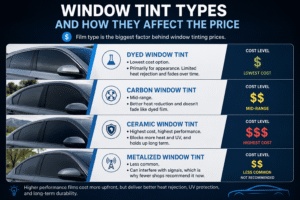
Types of Auto Window Tint
If a shop recommends ceramic, carbon, dyed, metallic, or hybrid film, don’t be afraid to ask why they’re recommending that option for your vehicle.
A good installer should be able to explain the trade-offs in plain language. The right choice depends on what you’re trying to solve. If heat inside the vehicle is your biggest frustration, you may end up choosing something different than someone who is mainly looking for privacy or glare reduction.
Here’s a quick overview of the most common options:
Dyed Film: Usually the most budget-friendly option. Helps with glare and privacy but doesn’t block heat as effectively as premium films.
Metallic Film: Offers solid heat reduction but can sometimes interfere with phone, GPS, or radio signals.
Carbon Film: A step up in heat performance and durability without the signal concerns associated with metallic films.
Ceramic Film: Generally provides the strongest heat rejection and UV protection, but it also comes with a higher price tag.
Hybrid Film: Combines characteristics of different film technologies and can offer a balance between performance and cost.
DIY Window Tinting vs. Professional Auto Window Tinting
People researching how to tint car windows often discover that applying film correctly is harder than it appears in online videos.
DIY kits can work for smaller projects, but achieving clean edges, avoiding contamination, and shrinking film correctly on curved glass requires experience and specialized tools.
Hiring a professional doesn’t automatically guarantee good results. The same warning signs discussed earlier still apply. Ask about the warranty, look at examples of completed work, and pay attention to how clearly the shop answers your questions.
A quality installer should have no problem walking you through the process before you commit.
Is Dawn Dish Soap Safe on Tinted Windows?
Yes, in most cases, Dawn dish soap diluted with water can be used on tinted windows. The key is avoiding abrasive tools, harsh chemicals, and ammonia-based cleaners that may damage the film over time.
A soft microfiber cloth combined with a mild cleaning solution is typically the safest approach.
Can a Commercial Vehicle (CMV) Have Tinted Windows?
Yes, commercial vehicles can have tinted windows, but the specific rules depend on state regulations and, in some cases, commercial vehicle requirements.
Because these regulations vary, it’s best to verify local laws before installing tint on a commercial vehicle.
Find a Reputable Auto Window Tinting Shop Near You
Choosing a tint shop involves more than comparing prices. Installation quality, warranty coverage, film selection, and attention to detail all play an important role in the final result.
If you’re comparing Sacramento tint shops and aren’t sure what questions to ask, call JH Window Tinting at (916) 266-1720. We’re happy to explain your options, discuss legal tint limits, and help you understand the differences between film types before you make a decision.
Frequently Asked Questions
Q1. Do cops care about 5% tint?
Yes. Illegal tint can attract attention during traffic stops and may result in citations depending on local enforcement practices.
Q2. What are common window tint mistakes?
Common issues include bubbling, peeling, contamination, poor alignment, and discoloration caused by low-quality film.
Q3. Is Dawn dish soap safe on tinted windows?
Generally, yes, when diluted properly and used with a microfiber cloth. Avoid abrasive materials and ammonia-based cleaners.
Q4. Can CMV have tinted windows?
Yes, but regulations vary based on state laws and commercial vehicle requirements.
Q5. Are there different types of ceramic tint?
Yes. Ceramic films vary by manufacturer, heat rejection performance, warranty coverage, and overall construction quality.
Q6.What are the best ceramic window tint percentages?
There is no single best percentage. The ideal choice depends on local tint laws, visibility preferences, privacy goals, and heat reduction needs.