

Have you ever opened your car door on a hot day and felt the heat rush out? Then you already know why window tinting is worth your money. It keeps your car cool, protects your interior, and gives you privacy. But before you schedule an appointment, you probably want to understand what the window tint cost is and what you’ll actually get for your money.
The cost to tint car windows depends on a few key things: the type of film, the vehicle and model, and the installer. If you’re searching for how much to get a car tinted, this complete window tint pricing guide will break it all down in simple terms so you can make a smart choice.
Also Read: How to Remove Old Window Tint Without Damaging
What Is the Average Cost of Car Tinting?
Professional car window tinting prices typically range from $100 to $600 for a full vehicle, with most drivers paying around $200–$400 on average. Whether you’re comparing auto-tinted windows prices, window tinting prices for cars, or general tinting cars windows cost, premium film types and larger vehicles can push that number considerably higher.
Here’s a quick overview of what to expect:
- Dyed film (basic): $100 – $250
- Carbon film (mid-range): $150 – $650
- Ceramic film (premium): $350 – $1,100+
- Multi-layer ceramic (top tier): $700 – $1,500+
SUVs, trucks, and vans cost more than sedans because they have larger or curved windows. Shops in high-demand areas like Sacramento often sit toward the upper end of these ranges.
Average Cost to Tint Car Windows by Vehicle Type
The average cost to tint car windows varies significantly depending on what you drive. Larger vehicles require more film and more labor, both of which add to the final price.
| Vehicle Type | Dyed / Carbon Film | Ceramic Film |
| Sedan | $200 – $350 | $350 – $500 |
| SUV / Truck | $250 – $450 | $400 – $650 |
| Van / Minivan | $300 – $500 | $450 – $800 |
| Luxury / EV | $400 – $700 | $600 – $1,500+ |
If you’re wondering how much to tint car windows on a compact car versus a large SUV, expect to pay roughly 20–40% more for the bigger vehicle due to surface area and complexity.
Window Tinting Cost by Popular Vehicle Make
Pricing also shifts slightly depending on the specific make and model, since window shapes and curvature vary. Here’s what to expect for some commonly searched vehicles:
| Make/Model | Average Full Tint Cost |
|---|---|
| Dodge (Charger, Challenger, Ram) | $200 – $500 |
| Honda Civic | $150 – $400 |
| Toyota Camry | $150 – $400 |
| Ford F-150 | $250 – $550 |
So if you’ve been searching for Dodge tint price specifically, most Dodge sedans and trucks fall right in line with mid-size vehicle pricing, though larger Ram trucks lean toward the higher end due to additional window surface area.
Car Window Tinting Prices by Film Type
The biggest part of your car window film cost comes down to the material used. Here are the most common types of window films and what they offer:
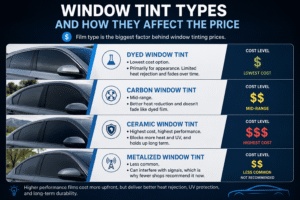
Dyed Window Tint
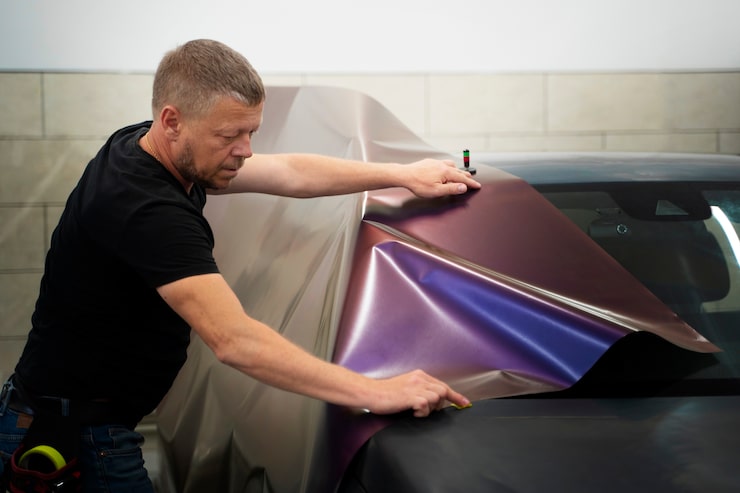
This is your most budget-friendly option. It darkens windows for privacy and reduces glare, but it does not block as much heat as more advanced films. It can also fade over time, especially under strong sunlight.
- Average price range: $100 – $350
- Best for: Budget-conscious drivers, basic privacy
Carbon Window Tint
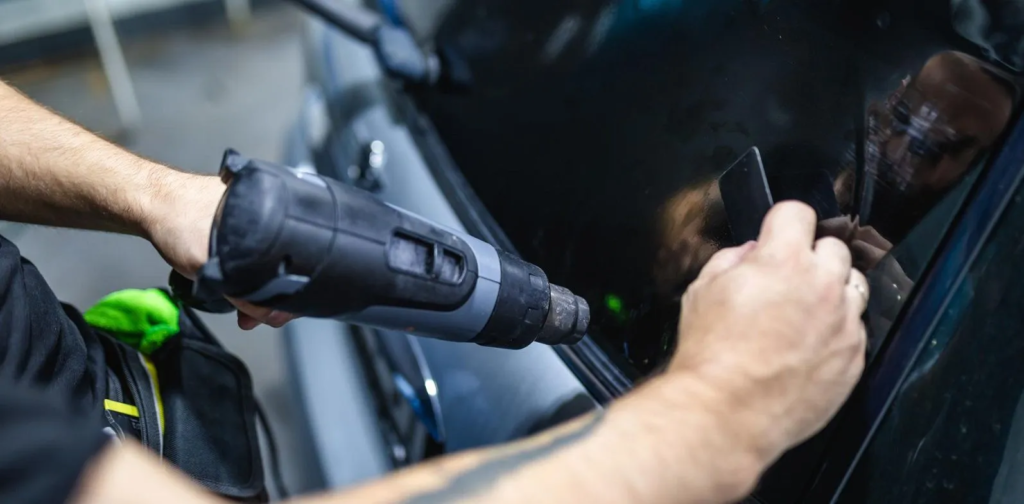
Carbon film features a matte-black appearance and effectively blocks infrared light, offering superior heat rejection and UV protection. It also doesn’t fade over time and won’t interfere with electronics, making it a strong mid-range choice.
- Average price range: $150 – $650
- Best for: Drivers wanting better performance without paying for ceramic
Ceramic Window Tint
This is what most professionals call the best window tinting option. It blocks up to 99% of UV rays, uses nano-ceramic particles to reject up to 95% of infrared heat, and does not interfere with GPS or cell signals. It is the most expensive option but lasts the longest and delivers the best overall value.
- Average price range: $350 – $1,100+
- Best for: Hot climates, luxury vehicles, long-term value
Metallic Window Tint
Metallic tint contains small metal particles that reflect heat and UV rays. It’s durable and provides a mirror-like finish but can interfere with GPS, radio signals, and cell reception a common drawback for modern drivers.
- Average price range: $150 – $500
- Best for: Heat rejection where signal interference isn’t a concern
Hybrid Window Tint
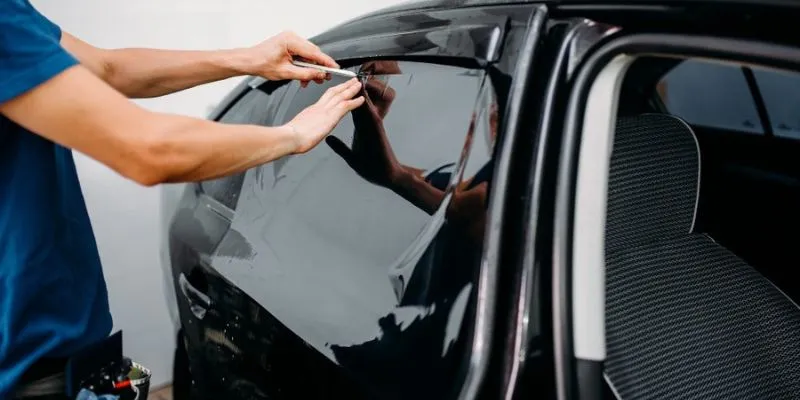
Hybrid films combine dyed and metallic layers, offering a balance of affordability and performance. They reduce glare and UV exposure without being overly reflective, though some signal interference may still occur.
- Average price range: $200 – $600
- Best for: Drivers wanting better-than-basic protection at a moderate price
How Much Do Car Tints Cost? Key Factors That Affect the Price
How much does tint cost for your specific car? Whether you call it window tinting auto cost, cost of window tinting car windows, or simply the price of window tinting car windows, the final number comes down to several factors beyond just the film itself.
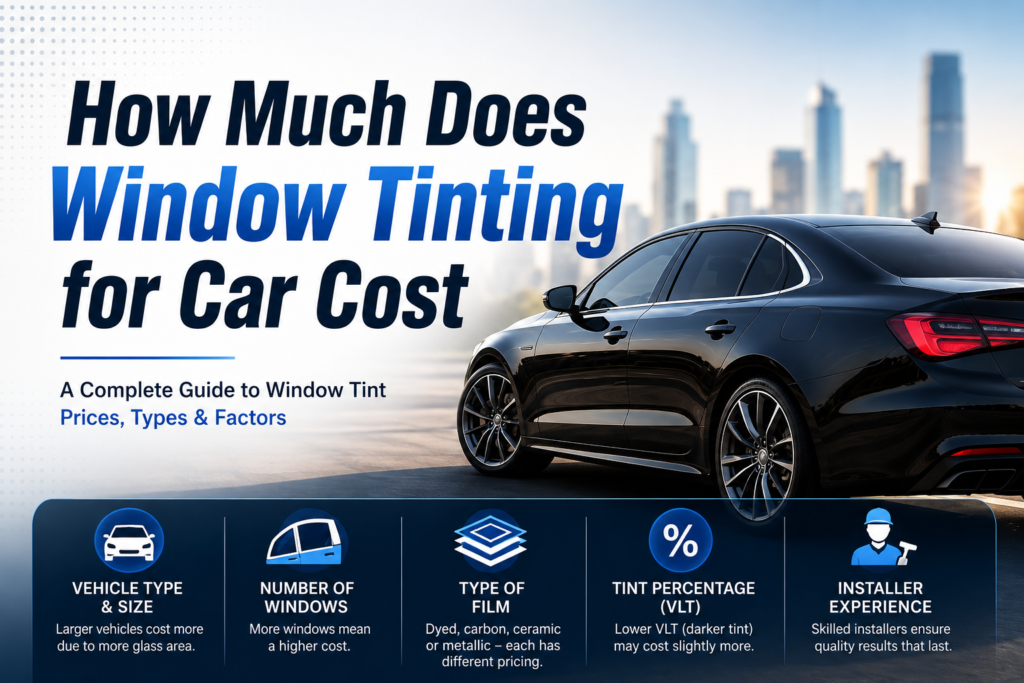
Vehicle Type and Window Surface Area
A simple two-door coupe is faster to tint than a large SUV or truck. Curved windows or complex door seals require more labor, which increases the total price. If you’re asking how much is it to tint car windows on a vehicle with unusually large or complex glass, expect to pay more.
Number of Windows Being Tinted
Whether you’re tinting just the front two windows or going for full coverage, the number of windows directly affects the final price. Tinting only the front doors usually costs $100–$150, while a full car, including back windows, costs considerably more.
Tint Percentage (VLT – Visible Light Transmission)
VLT measures how much light passes through the film. Lower percentages, like 5%, appear darker and may cost slightly more due to specialty manufacturing. Some states have legal limits on how dark your tint can be. Reputable installers will help you choose a VLT that complies with your state’s laws.
35% Window Tint on Car Price
35% VLT is one of the most popular choices among drivers, offering a good balance between privacy and visibility. If you’re looking for 35 VLT window tint price, expect to pay between $150 and $400 for a sedan, depending on the film type (dyed, carbon, or ceramic). For a 35 percent tint on car cost using premium ceramic film, prices can run $300–$600+.
30% Tint on Car Cost
30% VLT sits between medium and dark tint levels. The 30% tint on car cost typically falls in the same range as 35% tint, around $150–$450 for a full vehicle, since the manufacturing process and labor required are nearly identical across mid-range VLT percentages.
Common VLT levels and what to expect:
- 5% (Limo Dark) — maximum privacy, may not be street-legal in all states
- 20% (Dark) — popular choice for rear windows
- 35% (Medium) — good balance of privacy and visibility
- 50% (Light) — subtle tint, excellent UV protection
- 70% (Clear) — nearly invisible, primarily UV blocking
Tint Removal Cost
If your car already has old tint, removing it before applying new film can add to your total bill. Here’s what to expect when searching for tint removal cost:
- Average tint removal cost: $50 – $150 for most sedans
- Car tint removal cost on SUVs or trucks: $100 – $250 (more surface area, more labor)
- Old, bubbled, or sun-damaged film tends to cost more to remove than newer tint, since it’s more brittle and prone to leaving adhesive residue
If you’re asking how much to remove tint on your own vehicle, the better the condition of the existing film, the easier and cheaper the removal. Professional removal also protects your defroster lines and avoids scratching the glass, which DIY removal often risks.
Brand and Warranty
Top brands like 3M, SunTek, and LLumar come with strong warranties and consistently higher quality. Cheaper films may save money upfront but can bubble or fade within a year, costing you more in the long run.
Installer Experience
A skilled installer knows how to cut film precisely for your car model. They charge more, but you get cleaner edges, better adhesion, and a finish that lasts. When comparing cost of window tinting auto quotes, don’t choose based on price alone.
Installation Location
Where you get your tint installed also matters:
- Professional shop: Standard rates, most common option
- Mobile service: Convenient but typically adds $50–$100 to the total
- Premium dealer: Concierge service and high-end films, can increase cost by 20%+
Add-On Services
Additional services can raise your total significantly:
- Windshield tint: $60 – $300
- Sunroof tint: $50 – $200
- Old tint removal: $50 – $150
- Paint protection film: $200 – $800
- Extended warranty: +10–15% to total cost
Windshield Tint Cost and Sunroof Tint Pricing
Side and rear window tinting aren’t the only options, many drivers also add windshield and sunroof tint for extra heat rejection and a cleaner overall look.
Windshield Tint Cost
Windshield tint cost typically runs $60–$300, depending on whether you choose a full windshield strip or just a top visor band. Most states require a clear or near-clear film (high VLT) on the windshield for visibility and legal compliance, so pricing is often lower than darker side-window tint. Front windshield tint price can vary slightly based on curvature and the precision required around sensors, cameras, and rain detectors on newer vehicles.
Sunroof Tint Cost
Sunroof tint cost generally falls between $50–$200, depending on the size of the glass panel. Larger panoramic sunroofs found on SUVs and luxury vehicles sit toward the higher end. Sunroof tint helps block heat and UV rays from above, often the most direct source of cabin heat on sunny days, making it a popular add-on alongside side window tinting.
How Much for Tinted Windows? Full Price Breakdown by Film Type
Here’s a comprehensive summary of average car tint prices to help you compare options at a glance:
| Tint Film Type | Average Price Range (Sedan) | Pros | Cons |
| Dyed Film | $100 – $350 | Affordable, basic UV protection | Fades over time, low heat rejection |
| Carbon Film | $150 – $650 | Great heat/UV rejection, durable | Costs more than dyed |
| Ceramic Film | $350 – $1,100+ | Top-tier heat reduction, signal-safe | Higher upfront cost |
| Multi-layer Ceramic | $700 – $1,500+ | Ultimate performance and clarity | Premium pricing |
| Metallic Film | $150 – $500 | Reflective, effective heat blocker | Signal interference risk |
| Hybrid Film | $200 – $600 | Balanced features, decent heat blocking | May still fade or interfere with tech |
DIY vs. Professional Installation
While DIY tint kits are available for as little as $50, professional installation ensures precise application, proper curing, and long-term durability. Poor DIY jobs often result in bubbles, peeling, or improper adhesion. The additional upfront cost of going professional pays off with quality that lasts and a warranty to back it up.
How to Choose the Best Window Tinting for Your Car
Start by thinking about what matters most to you.
If your main concern is heat and UV protection, go with ceramic film. If you want privacy or a cleaner look on a tighter budget, carbon or dyed film may be enough.
Before booking, ask your installer these questions:
- What brand of film do you use?
- What does the warranty cover?
- How long will the installation take?
- How dark can I legally go in my state?
These small details can save you money and trouble later.
Final Thoughts on Car Window Tinting Cost
Window tinting is one of those upgrades that makes your car more comfortable, protects your skin and interior, and adds real value. The car tint price depends on your choices, but it’s usually worth every dollar when done right.
Whether you drive a compact sedan or a large SUV, understanding the average cost of car tinting and the factors that influence it puts you in a much better position to get quality work at a fair price. If you want results that last, choose trusted brands and skilled installers. At JH Window Tinting, we use only premium films backed by strong warranties, and our experienced team ensures a clean, long-lasting finish. The result will look better, perform better, and keep your car cooler for years to come.
Also Read: Why Your Car Still Feels Hot Even With the AC On
Frequently Asked Questions About Car Window Tinting Costs
How much is reasonable for tints all around?
A full tint job for a sedan typically runs $200–$400 for quality carbon or mid-range ceramic film. For an SUV or truck, budget $300–$650 or more. Paying under $100 for a full car is a red flag for low-quality film or workmanship.
Is ceramic tint worth the higher price?
Yes. Ceramic tint offers the best heat rejection, signal clarity, and long-term durability. For most drivers, especially those in hot climates, it’s the best value over time. It also won’t fade to purple the way cheaper films can.
Can window tint be removed later?
Yes, but professional removal is recommended to avoid damaging your glass or rear defrosters. Expect to pay $50–$150 for safe, professional removal.
How long does it take to tint a car?
Most vehicles take 1.5 to 3 hours, depending on coverage and film type.
Is 5% tint legal?
Laws vary by state. Most states allow 5% tint on rear windows but restrict front side windows to higher VLT percentages (usually 35% or more). Always confirm local regulations before choosing your tint darkness.
How much does tinted windows cost for a car overall?
Adding up film, labor, and any add-ons, most drivers pay windows tinting car price ranges between $150 and $650 for a full sedan with quality dyed or carbon film. SUVs and trucks typically run $250–$800. Getting a few quotes from local shops is the best way to nail down an exact number for your vehicle.
How do I get an accurate window tint quote?
The fastest way to get an accurate price for window tinting is to provide your vehicle’s year, make, and model, along with your preferred film type and VLT percentage. This allows the shop to give you an exact price rather than just an estimate. JH Window Tinting offers free, no-obligation quotes to drivers. Simply contact us with your vehicle details to get a quick quote.