

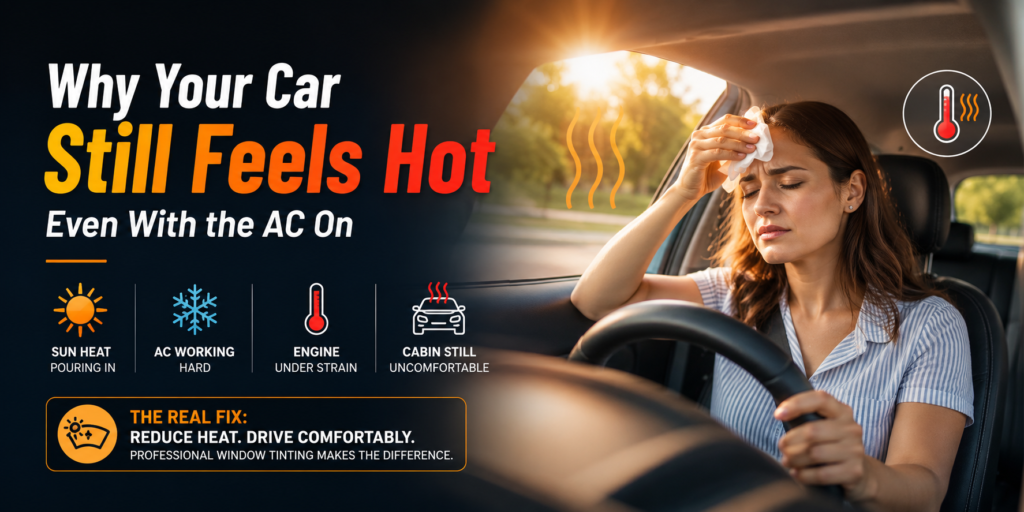
If your car still feels hot inside even with the AC running, you’re not alone, and the problem isn’t always what you think it is. Most people assume it’s a broken AC. They crank the fan higher, drop the temperature to the lowest setting, and still feel uncomfortable. One side of your body feels warm. The steering wheel is hot. The dash radiates heat for no reason.
Before you blame the AC, you need to understand what’s really going on.
Why Does It Feel Like the Heat Is On in My Car?
This is one of the most common complaints drivers have, especially in places like Sacramento and Orangevale where the sun doesn’t let up. The answer comes down to two separate things happening at the same time:
- Your AC is cooling the air inside the cabin.
- Sunlight is pouring through the glass and reheating everything inside constantly.
That solar heat lands on your seats, your dashboard, your arms, and your skin. So even while cold air is blowing from the vents, your car is being reheated from the inside out through the glass. That’s why it never quite feels right, and why feeling hot in your car despite the AC being on is so frustratingly common.
Why Do I Still Feel Hot With the AC On?
There are actually two categories of causes and understanding the difference matters.
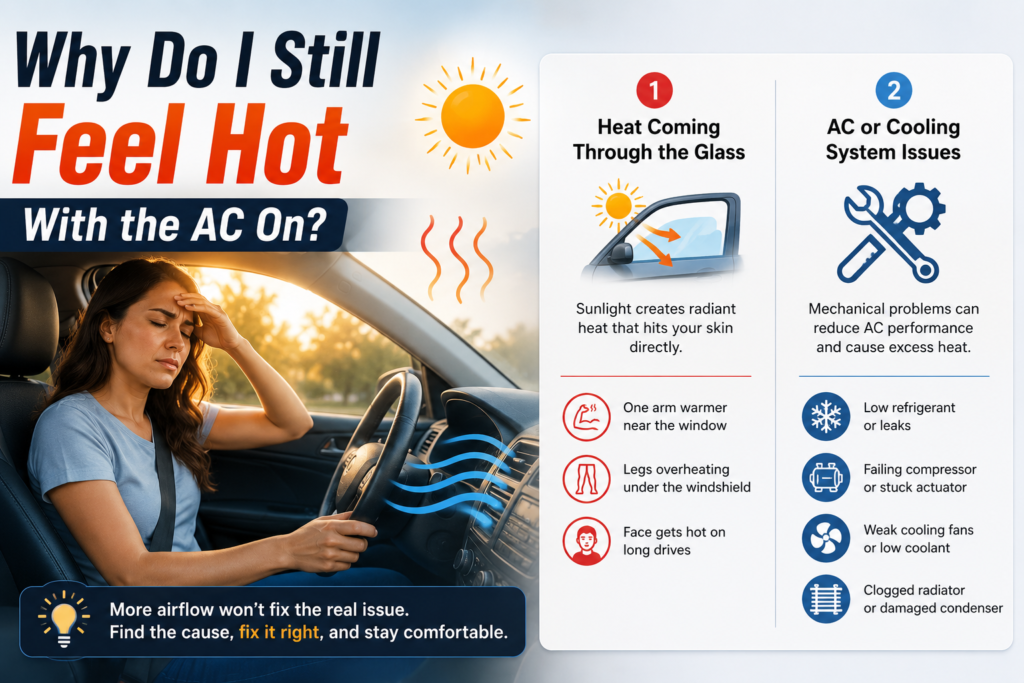
1. Heat Coming Through the Glass (The Most Overlooked Cause)
This is what most people miss entirely. Direct sunlight through your windows creates radiant heat the kind that hits your skin directly, no matter how cold the air around you is.
You’ve probably noticed it as:
- One arm feeling warmer than the other near the window
- Your legs overheating under the windshield
- The side of your face getting hot during a long drive
This isn’t a temperature problem. It’s an exposure problem. Turning the AC higher just makes the system work harder while the real issue stays exactly where it is. More airflow. More noise. Same discomfort. It’s like trying to cool a room while leaving the door open in summer.
2. AC System or Cooling System Issues
Sometimes the issue is mechanical. Here are the most common culprits your mechanic will look for:
AC System Problems:
- Low refrigerant the most common cause of weak or warm AC output. If your system has a leak, it loses the pressure needed to remove heat from the cabin.
- Failing compressor if the compressor isn’t circulating refrigerant properly, it can’t create cold air.
- Stuck blend door actuator if the actuator controlling the temperature door fails, airflow can get stuck on the “hot” setting even while the AC is running, which is exactly why it sometimes feels like the heat is on in your car even when it isn’t.
- Clogged cabin air filter a heavily blocked filter restricts airflow so you simply don’t feel the cold air making it to the cabin.
Cooling System and Engine Strain:
- Overworked or failing cooling fans if your radiator or condenser fans are weak, heat can’t be pulled away from the AC system, especially when idling or in heavy traffic.
- Low coolant or clogged radiator turning on the AC puts extra load on your engine. If the cooling system is already compromised, your car will start radiating heat instead of cooling it.
- Damaged condenser the condenser sits at the front of the car and cools the refrigerant. Clogged fins or crushed condenser coils prevent it from dissipating heat efficiently.
Why Does AC Come On With the Heat in Your Car?
This surprises a lot of drivers but it’s completely by design.
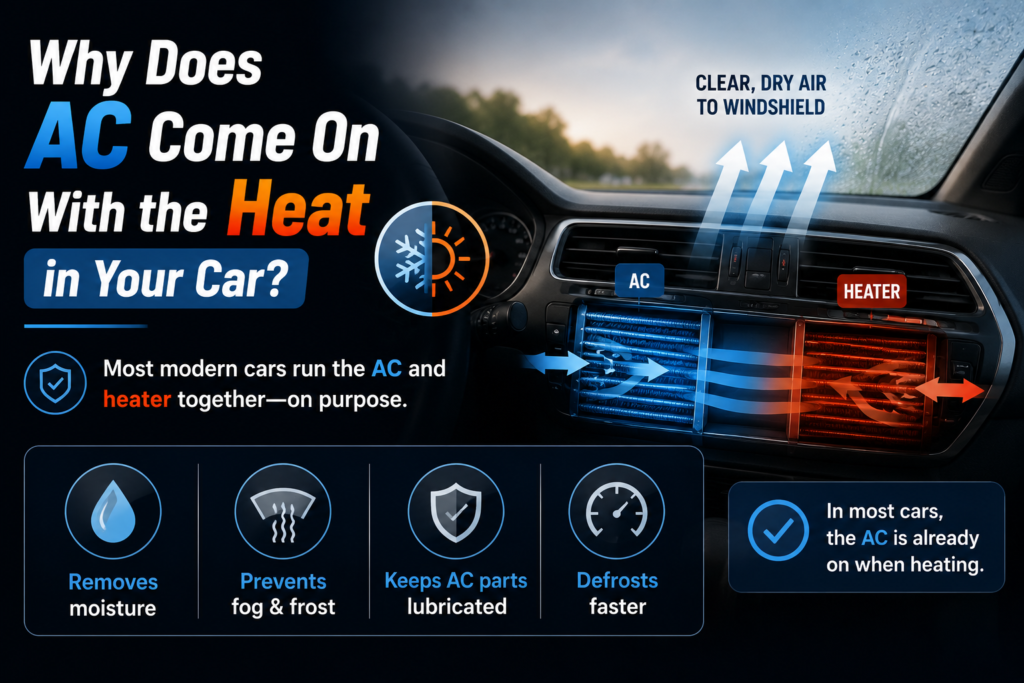
Most modern cars are engineered to run the AC and heater simultaneously, and for good reason. When you select defrost mode, your AC compressor automatically activates. Here’s why:
The heater core warms the air, but warm air alone doesn’t remove moisture. To actually dehumidify the cabin, the air needs to be cooled below the dew point which is exactly what the AC evaporator coil does. The dry air is then re-warmed by the heater and sent to the windshield vents.
Should the AC be on for heat in the car? In most cars, yes, and it’s already happening automatically. Running the AC compressor alongside the heater:
- Removes moisture from cabin air
- Prevents fogging and frost on windows
- Keeps compressor seals lubricated (which extends their life)
- Helps defrost the windshield far faster than heat alone
So if you’ve been wondering should AC be on when heating your car, the answer is: it probably already is, and that’s a good thing.
Does AC Make Heat Worse in Your Car?
When everything is working properly, no. But there is an important nuance.
When you switch on the AC, the compressor kicks in and places an extra load on the engine. If your engine’s cooling system is already struggling due to low coolant, a clogged radiator, or a failing water pump, added demand can push temperatures higher. This is why your car may heat up when the AC is on: the AC itself isn’t the root cause, but it reveals an existing weakness.
Warning Signs Your Car Is Running Hot With the AC On
Pay attention to these red flags:
- Temperature gauge climbing anything above normal operating range (190–225°F) while running the AC is a sign of cooling system stress.
- Dashboard warning lights or messages if you see “A/C off due to high engine temperature,” your car is shedding load to protect the engine.
- Engine overheating at idle if the car runs hot while stopped with AC on, a failing radiator fan is likely the culprit.
- Cold air turning warm if the AC stops blowing cold while the engine heats up, both systems may be involved.
Common Mechanical Causes of a Car Running Hot With AC
- Weak or failing cooling fans without enough airflow, the engine can’t shed heat, especially at idle.
- Low coolant levels one of the most common (and fixable) causes. Coolant absorbs engine heat and releases it through the radiator. Without enough, the system fails under AC load.
- Clogged radiator rust, debris, and mineral buildup from tap water block heat transfer and trap heat in the engine.
- Failing water pump a weak or clogged pump slows coolant circulation, letting temperatures rise under the added strain of the AC compressor.
If you notice any of these symptoms, don’t wait. Driving with an overheating engine risks blown head gaskets or complete engine failure. Have a professional diagnose it before it becomes a costly repair.
Why Is the Inside of Your Car So Hot Even After You Fix the AC?
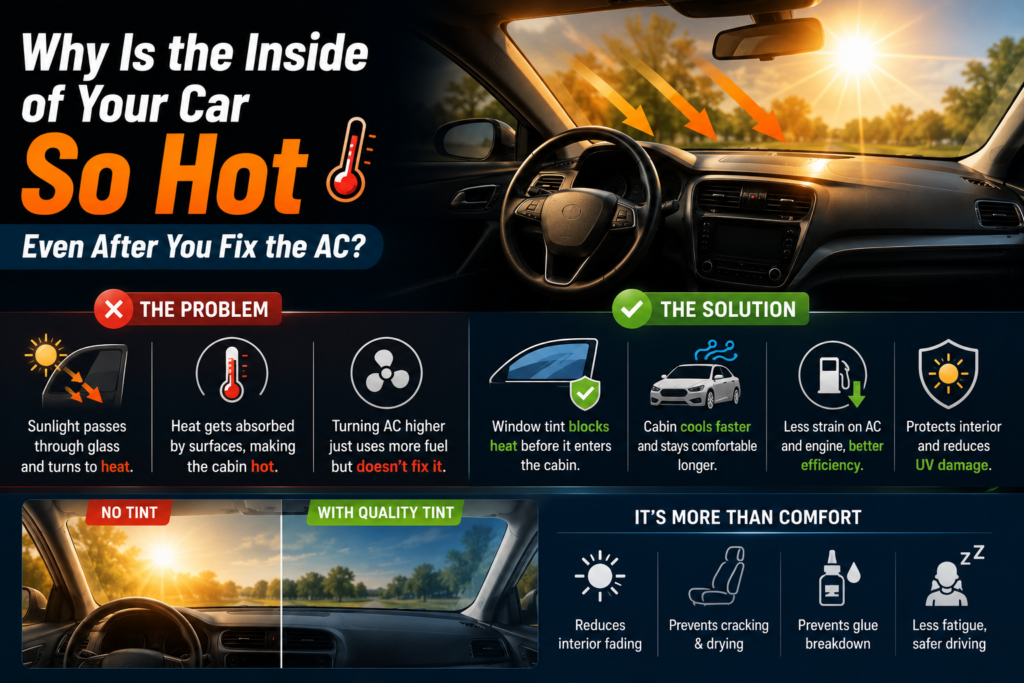
Here’s what most people realize too late: even a perfectly functioning AC system can’t fully compensate for heat pouring through the glass.
This is the part that gets overlooked because it’s not a mechanical problem. It’s a physics problem.
Sunlight passes through glass and converts to heat inside the cabin. That heat gets absorbed by your dashboard, seats, and everything else. Your AC then has to fight all of that thermal mass just to make the air feel tolerable which is why it takes so long to cool down, and why feeling engine heat inside the car while driving on a sunny day is so common even when nothing is technically wrong.
Turning the AC Higher Just Masks the Problem
Cranking the AC up doesn’t fix the source of heat it just makes your system work harder, burns more fuel, and still leaves you uncomfortable. You get more airflow, more noise, and the same discomfort.
The Fix Most People Don’t Consider
If heat is coming through the glass, you deal with the glass. That’s it.
Professional window tinting doesn’t “cool your car.” It reduces how much heat enters the cabin in the first place. Once that’s addressed, everything changes:
- The AC starts working the way it’s supposed to
- The cabin stabilizes faster after you get in
- You stop feeling that direct heat on your skin, arms, and legs
- Your AC runs less aggressively, which reduces strain on the engine
Not All Window Tint Does the Same Job
This is where people get let down. Some tint just darkens the glass it looks fine but does very little for heat. So the car still feels warm, and drivers assume tinting doesn’t work.
It does. The right kind does.
High-performance automotive window tint is specifically designed to block infrared heat, not just visible light. That difference shows up immediately, especially in Sacramento and Orangevale where sun exposure is relentless.
This Isn’t Just a Comfort Issue
A hot cabin isn’t just annoying it accelerates wear:
- Interior fading from UV exposure
- Cracking and drying of dashboard and leather
- Glue breakdown in upholstery and trim
- Increased fatigue while driving
And your AC working overtime to compensate puts extra load on your engine contributing to the exact cooling system strain that causes your car to run hot when the AC is on.
What Most People Say After Fixing It
The reaction is almost always the same: “I should’ve done this sooner.”
Not because it’s dramatic. Because it removes something that was constantly bothering them without them fully realizing how much.
Fix the Real Reason Your Car Feels Hot
If your car always feels a little too warm, whether the issue is mechanical, solar, or both, it’s not something you have to live with.
At JH Window Tinting, we offer professional automotive window tinting in Orangevale, CA, focused on performance, not just appearance.
- Less heat coming through the glass
- Less strain on your AC and engine
- A cabin that actually feels the way it should