

Yes, winter is a great time to tint your car windows. Cold weather doesn’t stop the curing process, and you’ll skip the summer rush at local window tint shops. Here’s what you need to know before you book.
Is It Okay to Tint Your Car Windows in Winter?
Yes, you can tint your windows any time of year, including winter. Modern window film is engineered to cure in a wide range of temperatures, not just summer heat.
Cold weather can slow the curing process down slightly, but it won’t stop it. At JH Window Tinting, our installers control the variables that actually matter clean glass, proper film tension, and a dust-free space.
In our experience, a professional window tinting install holds up just as well in January as it does in July. You don’t need to wait for warm weather to protect your investment.
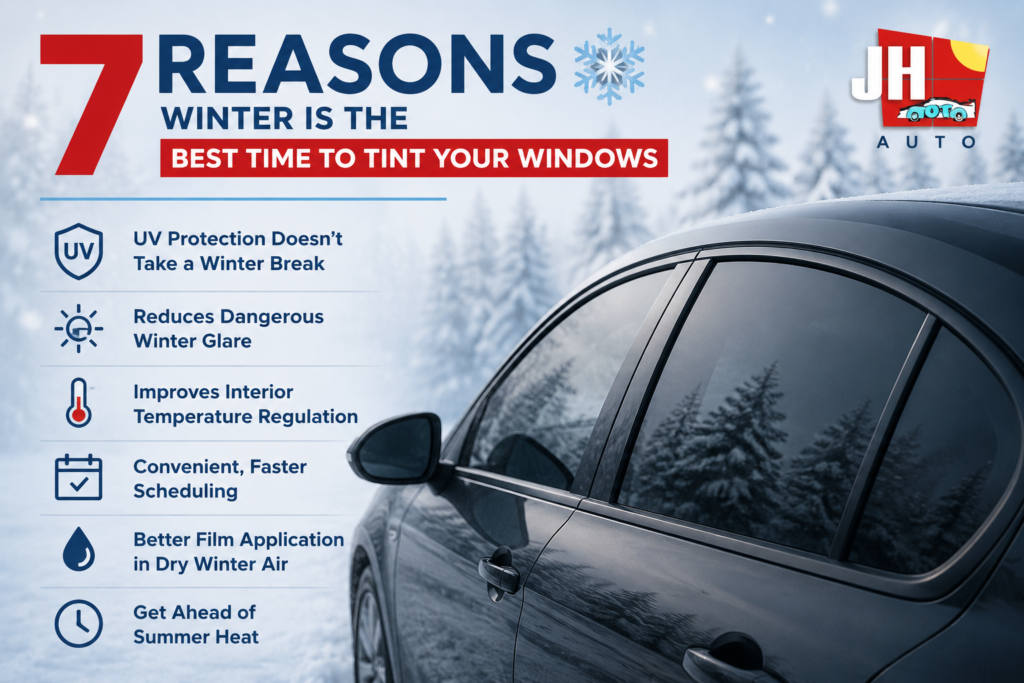
7 Reasons Winter Is the Best Time to Tint Your Windows
Winter offers real advantages over summer tinting from a cleaner application to faster scheduling. Here’s what makes the cold months smart timing.
UV Protection Doesn’t Take a Winter Break
UV rays don’t take a winter vacation. They pass through glass year-round, even on cloudy days, and snow or wet pavement can reflect even more light back at your windows.
High-quality film blocks up to 99% of harmful UV rays. That protects your skin on long drives and keeps your dashboard, seats, and trim from fading or cracking.
Reduces Dangerous Winter Glare
Winter sun sits lower in the sky, hitting your eyes straight on during your morning and evening commute. Glare off snow, ice, and wet roads makes it worse.
Window tint cuts that glare significantly. Think of it as built-in sunglasses for your windshield and side windows sharper visibility, safer drives.
Improves Interior Temperature Regulation
Tint doesn’t just block heat in summer. It also helps hold heat in during winter by adding a thin layer of insulation between your cabin and the cold glass.
That means your heater works less hard, your cabin warms up faster, and you spend less time scraping frost while the defroster catches up.
Convenient, Faster Scheduling
Most drivers wait until summer to tint their windows, which means local window tint shops get backed up fast. Winter is the slow season, so you’ll have an easier time getting the appointment time you actually want.
At JH Window Tinting, that means shorter waits and more flexibility for drivers across United States booking local window tinting now.
Better Film Application in Dry Winter Air
Humidity is the enemy of a clean tint job. High moisture in summer air can get trapped between the film and the glass, leading to bubbles or a hazy finish.
Winter’s drier air gives our installers more control during application. Lower humidity means fewer bubbles and a cleaner result the first time.
Get Ahead of Summer Heat
Summers turn parked cars into ovens fast. If you tint now, your film will already be fully cured and performing by the time the heat arrives
Many of our clients pair their winter tint appointment with paint protection film to cover both comfort and paint protection before peak season hits.
Also Read: Why Your Car Still Feels Hot Even With the AC On
What to Expect: Winter Tint Installation and Curing Time
Cold weather changes the timeline, not the outcome. Here’s what actually happens after your appointment.
How Long Curing Takes in Cold Weather
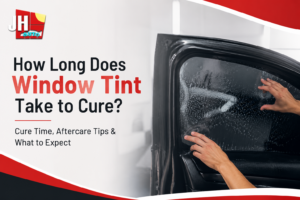
Curing is the process where the adhesive fully bonds the film to your glass. In warmer months, that takes about a week. In winter, it can take a few weeks longer because cold air slows the adhesive down.
That’s why a temperature-controlled installation space matters. Our shop keeps conditions consistent, so the film bonds correctly no matter what it’s doing outside.
When You Can Roll Your Windows Down
Most installers recommend waiting 48 to 72 hours before rolling your windows down, even though full curing takes longer. Rolling them down too soon can shift the edges before the adhesive sets.
For a full breakdown of what to do and avoid during the first month, check out our complete aftercare guide.
Also Read: Window Tint Aftercare: The Complete First 30 Days Guide
Ceramic vs. Carbon Tint: Which Is Best for Winters?
Both films perform well in cold weather, but they offer different strengths. Here’s how to choose.
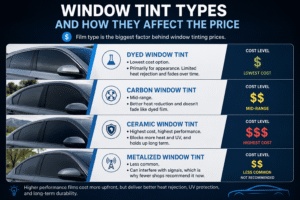
- Ceramic film blocks the most heat and UV rays without going darker. It’s the better pick if you want maximum insulation through cold mornings and hot summers alike.
- Carbon film offers solid heat rejection and a clean, matte finish at a lower price point than ceramic. It’s a strong middle-ground option if budget matters.
- Both films cure the same way in winter. Temperature affects the timeline, not which type you should choose.
Many of our car window tinting clients ask which option is the best window tint for year-round Sacramento weather. In our experience, ceramic earns its higher price tag if you drive daily and want the strongest protection in every season.
Is Window Tinting Legal in California?
Yes, as long as you stay within California’s darkness limits. Here’s what the law actually allows.
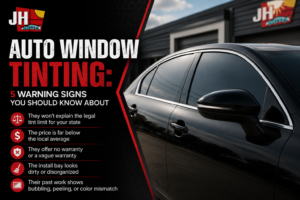
Front side windows must let in 70% of light or lighter. Rear windows and the back windshield can be any darkness. Windshield tint is limited to a strip no more than 4 to 5 inches from the top.
Getting this wrong can mean a fix-it ticket, so it’s worth confirming the legal limits before you pick a shade.
Also Read: What Is the Darkest Legal Tint in California
How Much Does Window Tinting Cost?
Most sedans run $150 to $300 for standard film, with ceramic and full-vehicle jobs costing more. Your final price depends on your vehicle, film type, and shop.
Winter pricing isn’t usually lower, but slower scheduling means you’re more likely to get the appointment slot and the installer’s full attention that you want.
If you also run a storefront or office, this is a good time to ask about commercial window tinting too. Many businesses tint in winter to cut summer cooling costs before the heat arrives.
Frequently Asked Questions
Will my tint cure properly if it’s cold outside?
Yes. A professional shop installs and cures film indoors in a controlled environment, so outdoor temperature doesn’t affect the bond. The only difference is that curing takes a bit longer in winter.
How long should I wait before rolling my windows down?
Wait 48 to 72 hours minimum before rolling your windows down. Full curing can take a few weeks longer in cold weather, so avoid rough cleaning or pressure washing the glass during that time.
Is winter tinting cheaper than summer?
Pricing usually stays consistent year-round, but winter often means faster booking and shorter wait times. That makes it a practical, if not cheaper, time to get it done.
Can I get commercial window tinting done in winter too?
Yes. Offices and storefronts can be tinted in winter just like vehicles, and many businesses use the slower season to schedule installation before summer cooling costs spike.
Book Your Winter Window Tinting
You don’t have to wait for warm weather to protect your vehicle. Winter gives you faster scheduling, a cleaner application, and a head start before next summer’s heat.
JH Window Tinting serves Sacramento, Elk Grove, Roseville, Citrus Heights, Folsom, and the surrounding area with auto window tinting built to handle every season. Call us today to schedule your appointment.