

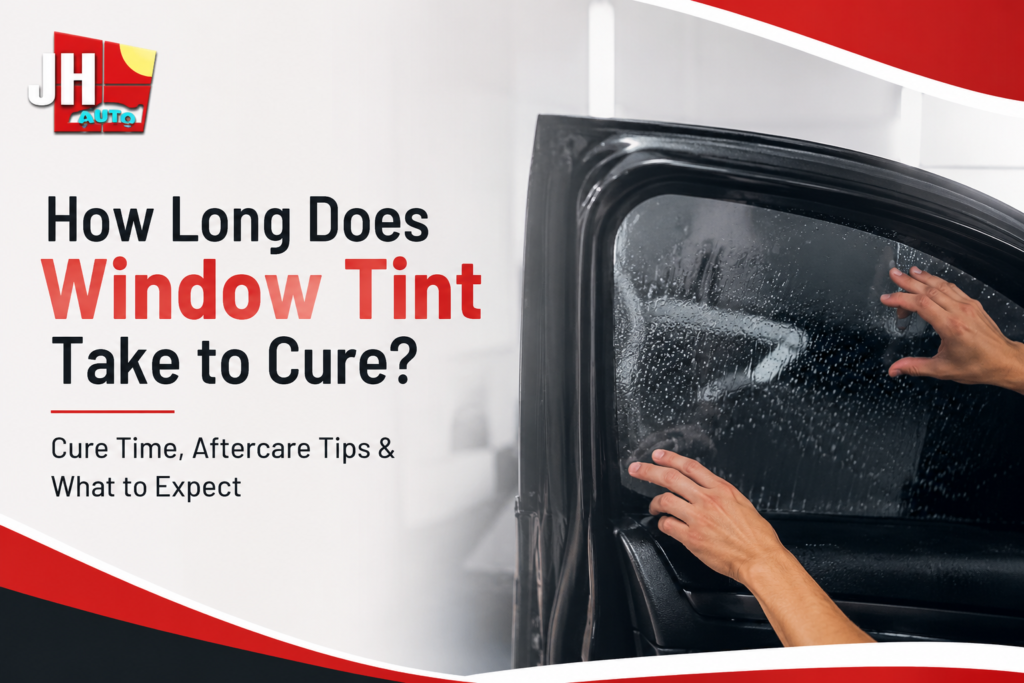
If you’ve recently had your vehicle tinted, one question usually comes up first: how long does window tint take to cure?
In most cases, window tint takes anywhere from 2 to 10 days to fully cure, with many vehicles finishing the process within about a week. The exact timeline isn’t the same for every vehicle.
The type of film, the weather, and the conditions during those first few days all play a part in how quickly the tint finishes curing. Understanding those factors makes it easier to know what to expect after installation.
Window Tint Cure Time by Film Type
Not every window film cures at the same speed. Some films are thinner and release moisture quickly, while others have multiple layers that naturally take longer to settle.
| Film Type | Typical Cure Time | Why It Takes This Long |
| Dyed Film | 2–4 days | Thin construction allows moisture to evaporate quickly. |
| Carbon or Hybrid Film | 3–5 days | Slightly thicker film needs a little more time for the adhesive to stabilize. |
| Ceramic Film | 5–7 days | Multiple layers and advanced construction hold moisture longer before reaching full strength |
| Security or Multi-Layer Film | 7–10+ days | Extra thickness means the adhesive takes longer to dry completely. |
Ceramic window tint cure time is often a little longer than standard dyed film, but that doesn’t mean anything is wrong. Higher-performance films are built differently, and the curing process reflects that.
If your installer recommends waiting several extra days before rolling the windows down, they’re usually taking the film type into account rather than being overly cautious.
Also Read – Ceramic vs. Dyed vs. Carbon Tint
Tint Installation Time vs. Cure Time: They’re Not the Same
Installing window tint usually takes between 1 1⁄2 and 4 hours, depending on the vehicle and the number of windows, but that’s just the install. Curing is a separate process that starts once you drive away.
Your appointment may only take a couple of hours, but that doesn’t mean the tint has finished settling. The film continues bonding to the glass after you leave the shop, which is why the waiting period matters.
That’s why installers often ask you to leave the windows up for a while after your appointment. The tint may look finished, but it hasn’t reached its full strength yet.
What Affects Window Tint Curing Time?
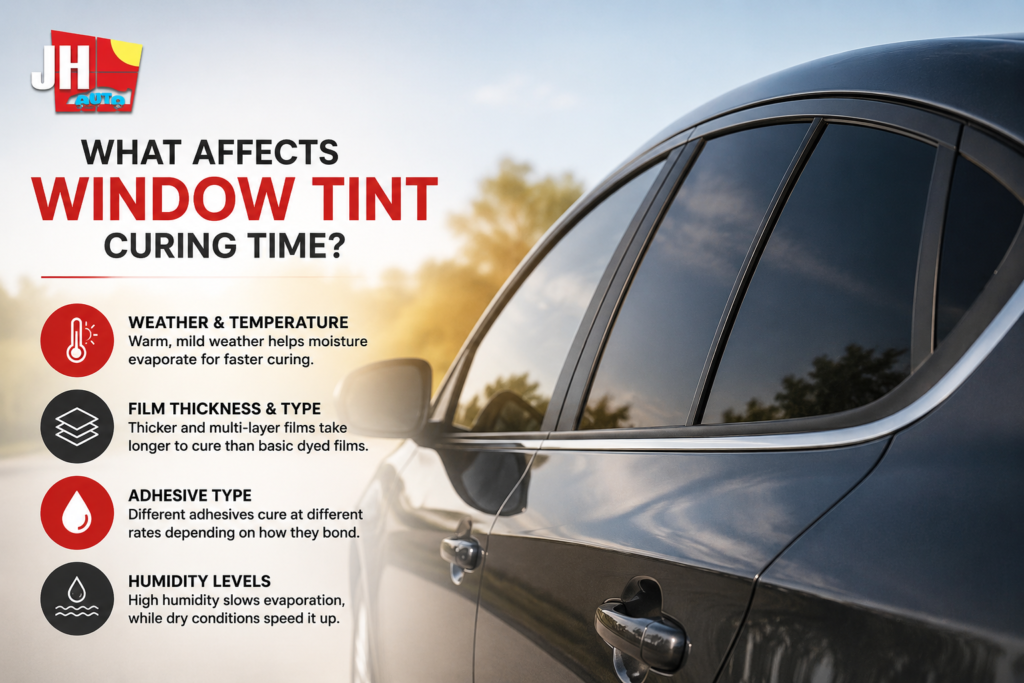
Image alt text – Factors affecting window tint curing time infographic by JH Auto Tinting
Two vehicles tinted on the same day don’t always finish curing at the same time. Several factors influence how quickly moisture leaves the film and how well the adhesive bonds to the glass.
Weather and Temperature
Warm, mild weather helps moisture evaporate at a steady rate, which allows the adhesive to bond more efficiently. Conditions around 65°F to 80°F generally provide a comfortable curing environment.
Cold weather slows everything down. Moisture remains trapped beneath the film longer, so the curing process naturally takes more time. Extremely hot weather can speed up evaporation, but intense heat immediately after installation isn’t always ideal either.
For example, a car tinted with ceramic film during a dry Sacramento summer might fully cure in about five days, while the same film installed in December could take closer to ten because of the extra moisture lingering in cooler air.
Film Thickness and Type
A basic dyed film is relatively thin, so moisture doesn’t have far to travel before it evaporates. Ceramic, carbon, hybrid, and security films are built with extra layers for better heat rejection and durability. But that added material means more for moisture to work through before the film fully cures
That’s one reason higher-performance films often require a little more patience during the first week.
Adhesive Type
Some films use pressure-sensitive adhesives that start bonding almost immediately after installation. Others use water-activated adhesives, which take longer because leftover installation moisture has to evaporate first.
This is happening beneath the surface, so the film may appear perfectly normal while it’s still curing.
Humidity Levels
A 75°F day in dry air and a 75°F day in heavy humidity won’t cure film at the same rate. When the air already holds a lot of moisture, water trapped beneath the film evaporates more slowly.
On the other hand, dry conditions generally help moisture escape more efficiently, allowing the adhesive to stabilize sooner. If your installer says your tint may take longer because of the weather, they’re usually considering humidity as much as temperature.
Also Read – Why Your Car Still Feels Hot Even With the AC On
How to Tell If Your Window Tint Has Fully Cured
Waiting a few days is helpful, but the calendar doesn’t always tell the whole story. The easiest way to know the curing process is nearly complete is by looking at the film itself.
Start by checking the windows in natural daylight. The small water pockets or hazy appearance that sometimes show up after installation should gradually disappear as moisture evaporates. The film should also sit flat against the glass, with the edges fully sealed and no signs of lifting.
Take a look at the windows outside during the day instead of inside the garage. Small water pockets are much easier to notice in sunlight, and they’re usually less noticeable every day as the film cures.
If bubbles appear larger after several days or the edges begin peeling away from the glass, it’s worth contacting the installer. Those issues are different from the temporary moisture pockets that often disappear on their own.
Why the Rear Window Sometimes Takes Longer
Rear windows sometimes need a little extra patience because of the built-in defroster lines beneath the glass, and it’s best to avoid using the defroster unless necessary while the tint cures.
While the tint is curing, it’s best to avoid using the rear defroster unless it’s necessary. The extra heat can interfere with the adhesive before it has finished bonding, especially during the first few days after installation.
The windshield usually follows the same curing timeline as the side windows if it’s legally tinted, but windshield tint laws vary by state. Those regulations are separate from the curing process, so it’s worth confirming what’s allowed before having the windshield tinted.
How Long Does It Take for Window Tint to Cure in Winter, Summer, and Spring/Fall?
The season has a noticeable effect on how much time tinted windows take to cure. Temperature and humidity both influence how fast moisture leaves the adhesive.
Winter
Tint installed in cold weather often takes seven to ten days, sometimes longer, since moisture stays trapped beneath the film and slows everything down.
Parking inside a garage whenever possible can help maintain a more consistent temperature, but the film still needs time. Rolling the windows down too early during winter is one of the easiest ways to disturb the adhesive before it has finished bonding.
Also Read – Why Winter is the perfect Time for Window Tinting
Summer
Under typical summer conditions, many vehicles finish curing in three to five days, since warm weather helps moisture evaporate faster.
That doesn’t mean it’s safe to use the windows sooner simply because the weather is hot. The film may look clear before the adhesive has completely settled, so it’s still worth following the installer’s recommendations before rolling the windows down.
Spring and Fall
Moderate temperatures and lower humidity make spring and fall the most balanced seasons for curing, letting moisture evaporate steadily without the extremes that can slow things down.
If your appointment falls during these seasons, the curing timeline often stays close to the manufacturer’s general recommendations.
Can You Roll Your Windows Down While Tint Cures?
It’s best not to; keeping the windows closed for at least three to five days gives the adhesive enough time to hold the film securely against the glass. Some ceramic and multi-layer films may require a little longer, especially during colder weather.
Even if the tint looks completely dry after a couple of days, the adhesive may still be curing beneath the surface. Rolling the windows down too soon can shift the film near the edges, creating problems that are difficult to correct without reinstalling it.
Your installer will usually recommend a waiting period based on the film they installed and the weather conditions at the time of your appointment. Following that advice is the simplest way to avoid unnecessary problems.
How Long Do Tints Last Once Fully Cured?
Once fully cured, a quality film can last well over a decade, depending on the film, the quality of the installation, and how the windows are maintained over time. Lower-quality materials may begin fading, peeling, or discoloring much sooner.
Allowing the film to cure properly is part of protecting that investment. Rushing the process or ignoring the aftercare recommendations can affect how well the film performs over the long term.
Also Read – Window Tint Aftercare
Window Tint Aftercare Tips
The first week after installation is when your tint needs the most attention. A few simple habits can help the film cure properly and reduce the risk of accidental damage.
Here are a few recommendations installers commonly give after a tint appointment:
- Keep the windows rolled up for the recommended waiting period.
- Avoid cleaning the inside of the windows until the film has fully cured.
- If the windows need cleaning later, use a soft microfiber cloth and an ammonia-free cleaner.
- Don’t press on small water pockets or hazy areas. They usually disappear as the film cures.
- Avoid attaching suction cups or temporary accessories to newly tinted windows until the curing process is complete.
Once the film has fully bonded to the glass, regular cleaning and routine care are usually all that’s needed. At that point, you can treat the windows like normal.
Finding a Window Tint Installer
Choosing the right installer has just as much impact on the final result as the film itself, so it’s worth asking a few questions before booking.
Before scheduling an appointment, ask what type of film they recommend for your vehicle and why. A shop that takes the time to understand how you use your vehicle is usually more interested in finding the right solution than selling the most expensive option.
It’s also worth asking about warranty coverage, expected curing time, and any aftercare instructions you’ll need to follow. Clear answers to those questions often say more about a shop’s professionalism than a discounted price ever will.
If you’re comparing installers around Sacramento, look for businesses with consistent reviews, examples of completed work, and a willingness to explain the process before the installation begins.
If you’d like to learn more about the different film options available, you can also read our guide on the Types of Car Window Tint before making your decision.
Ready to Schedule Your Window Tint Appointment?
A quality window tint installation doesn’t end when the film goes on the glass. The curing process plays an important role in how the finished tint looks and performs for years to come.
If you have questions about window tint cure time, film options, or what to expect after installation, call JH Window Tinting at (916) 266-1720. We’ll explain your options, answer your questions, and help you choose a window film that’s a good fit for your vehicle.
Frequently Asked Questions
Q1.How long does it take for window tint to cure?
Most window tint finishes cure within 2 to 10 days, although the exact timeline depends on the film, temperature, humidity, and weather conditions after installation.
Q2. Can I wash my car while the tint is curing?
Yes. Washing the outside of the vehicle is generally fine because it doesn’t affect the film on the inside of the glass. Just avoid cleaning the inside of the windows until the installer recommends it’s safe to do so.
Q3. Can I roll my windows down after one day?
It’s best to wait. Most installers recommend keeping the windows closed for at least three to five days. Some films and colder weather conditions may require a longer waiting period.
Q4. Why does my tint look cloudy after installation?
A cloudy or slightly hazy appearance is usually caused by moisture trapped beneath the film during installation. As the adhesive cures and the moisture evaporates, the film should gradually become clear.
Q5. Does ceramic window tint take longer to cure?
In many cases, yes. Ceramic films are often thicker than standard dyed films, so they can take a little longer to reach full adhesion. Your installer can provide a more accurate estimate based on the specific film that was installed.
Q6. Does parking in the sun help the window tint cure?
Moderate warmth can help the curing process, but leaving the vehicle in intense heat for extended periods isn’t necessary. Following your installer’s aftercare instructions is more important than trying to speed up the process.