



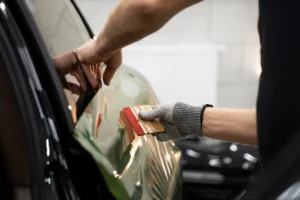
Rear window tint removal makes people nervous for one reason those thin orange lines running across the glass. They don’t look fragile, but they are. And once they’re damaged, the defroster doesn’t “sort of” work. It just stops working in that section.
If you’re thinking about removing old tint yourself, especially from the back window, this is the part you need to understand before you start pulling at anything.
Why Rear Window Tint Is Different
Side windows are fairly straightforward. They’re just glass and adhesive. If you make a mistake, it’s frustrating but rarely permanent. Rear windows are different because of the defroster grid. Those lines are bonded to the inside of the glass. Tint film is installed directly over them. Over time, heat from the sun and daily use causes the adhesive to bond tightly to both the glass and the grid.
When tint ages and starts bubbling or turning purple, the adhesive underneath is often the real problem. That adhesive is what makes removing auto window tint tricky on the rear window.
What Usually Goes Wrong
Here’s what causes damage most often:
1. Peeling too aggressively
If you grab a corner and pull hard, the adhesive can take parts of the defroster line with it. Once that line lifts, it’s broken.
2. Scraping with a razor blade
This works on side windows. On rear glass, it can slice straight through a defroster strip in one pass.
3. Dry removal
Trying to remove film without softening the adhesive first increases resistance, which increases the chance of tearing something you shouldn’t. Most rear window damage happens in the first five minutes.
How to Remove Rear Window Tint More Safely
If you’re determined to try it yourself, the goal is simple: soften the adhesive before you pull anything. Heat and moisture are your allies.
A common method involves:
- Warming the glass from the outside using sunlight or a heat source
- Applying a solution like soapy water or ammonia-based cleaner to the inside
- Covering the surface with plastic to trap moisture and heat
The idea is to let the adhesive loosen so the film lifts with less resistance. When it works, the tint comes off in larger pieces instead of shredding into tiny strips. Even then, patience matters. Slow, even pulling is far safer than force.
When to Stop and Let a Shop Handle It
If the tint is very old, deeply bubbled, or brittle, removal becomes more delicate. The adhesive hardens over time. In those cases, forcing it can cause permanent grid damage.
Professional removal uses controlled heat and techniques designed to reduce stress on the defroster lines. Shops that regularly install the best auto window tint film also understand how adhesives behave years later. That experience matters when you’re working around something as thin as a defroster strip.
After Removal: The Residue Problem
Even if the film comes off cleanly, adhesive residue usually remains. That residue needs to be dissolved carefully. Abrasive pads and sharp blades are not good choices for rear glass.
This is also why many people choose to remove and replace in the same visit. If you’re planning to install new auto tinting window film, proper surface preparation makes a difference in how the new film performs.
Is It Worth Doing Yourself?
It depends. If the tint is relatively new and peeling cleanly, removal can be manageable with patience. If it’s old and baked on, the risk increases. The cost of professional removal is usually lower than the cost of repairing a damaged rear defroster grid. That’s the tradeoff.
If you’re already researching window tint for auto upgrades or replacements, it often makes sense to have the removal and reinstallation handled together.
The Bottom Line
Rear window tint removal isn’t impossible. It just requires patience, heat, and restraint. The defroster lines are the only part you can’t easily fix if something goes wrong. Everything else is just film and adhesive.
If you’re unsure, or if the tint looks severely aged, having a professional handle removing auto window tint can save you from a permanent mistake.
And if you’re replacing it afterward, you’ll start fresh with film that actually performs the way it should.